
ENGINEERING
THE INTERFACE
ConceptVera is not just a gaming environment; it is a high-performance orchestration layer. We’ve deconstructed the mobile gaming experience to solve the friction between visual fidelity and hardware constraints.
Optimized for 120Hz refresh rates and sub-15ms input latency across European edge nodes.
Deterministic Physics
Our custom solver facilitates realistic projectile trajectories and material destruction without desync. By utilizing server-authoritative physics, we ensure that a 64-player session remains consistent for every user, regardless of local hardware variance.
MODULE_TYPE: PHYS_ENGINE_01

Global Illumination
Dynamic light sources cast accurate, soft shadows and reflections that update in real-time. Whether it's a flickering neon sign or a destructible light fixture, the environment reacts instantly.
Spatial Audio propagation
Our audio toolkit calculates sound occlusion based on material density. Sounds bend realistically around concrete corners and attenuate through glass, providing tactical awareness for competitive gameplay.
- HRTF-Compatible Outputs
- Dynamic Occlusion Mapping
Branching Scripting
Eliminate external writing tools. Our integrated narrative editor allows for complex dialogue trees and world-state triggers directly within the viewport. Designers can link UI actions to deep variables without opening a code editor.
State Logic
Conditional Gates
Integration
Live Event Triggers
Architectural Logic
Every feature is evaluated against strict performance safeguards. We do not prioritize visual fidelity if it compromises the following critical thresholds.
Memory Budget
Minimum 4GB LPDDR4X headroom; asset streaming triggers at 85% utilization.
Thermal Cap
Automated frame-pacing adjustment if SoC temperate exceeds 42°C for >30s.
Methodology Note
"Robustness is measured by frame-time variance, not just average FPS. We evaluate stability using the 99th percentile frame latency—meaning we track the bottom 1% of frames to identify 'stutter' events that often go unnoticed by standard monitoring. Risk is mitigated by isolating heavy script execution to secondary CPU cores, ensuring the main render thread remains unblocked during complex procedural generation events."
Key Logic Assessment
How do we solve network variance?
Client-side prediction with immediate server rollback ensures a snappy feel even at 100ms+ pings.
Is cross-platform really one build?
Yes, the pipeline handles retopology and format conversion automatically lors of the CI/CD sweep.
What about battery optimization?
Dynamic LOD (Level of Detail) scaling reduces GPU clock speeds during non-essential UI interactions.
How robust is the UI system?
The declarative framework ensures 1:1 layout parity between 16:9 and 21:9 displays instantly.
Are there licensing tradeoffs?
Initial integration requires higher setup time but yields zero per-seat revenue share thereafter.
Concept in Action
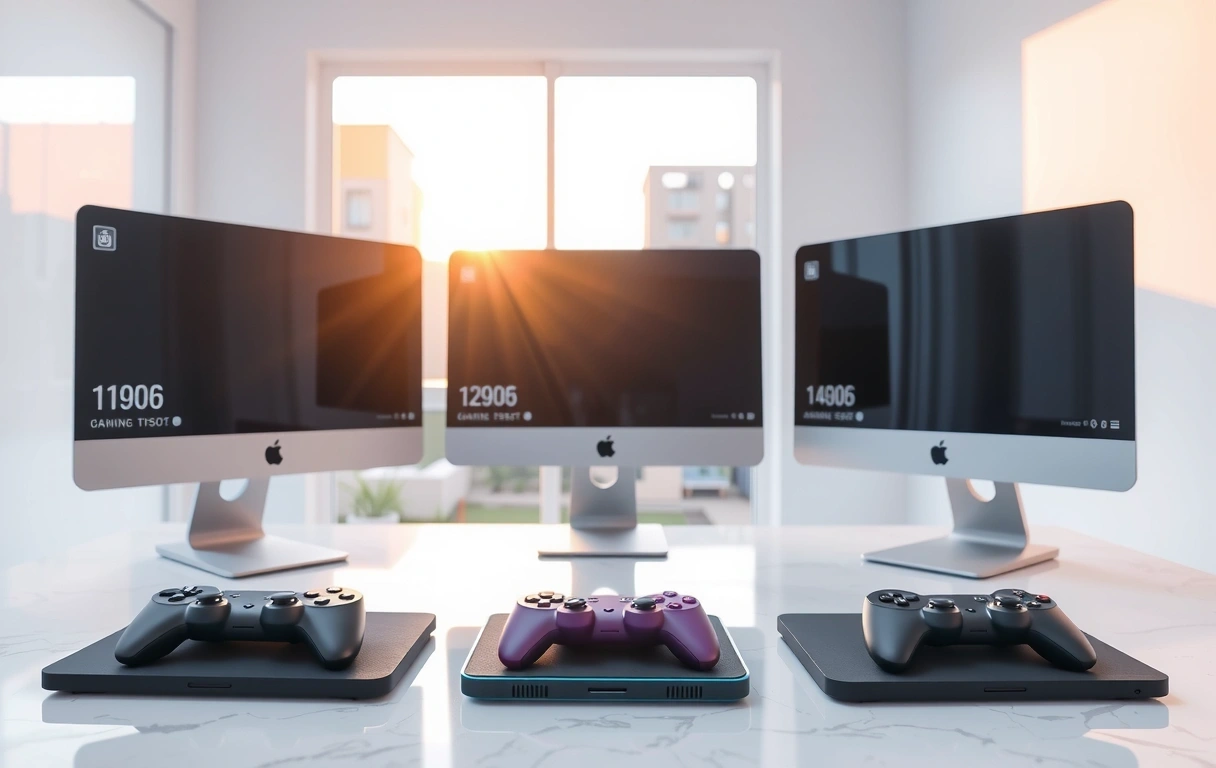
Scenario: A High-Stakes Mobile Competitor in an urban environment with fluctuating 5G coverage and heavy background app activity.
During a recent closed-beta stress test, we simulated a high-density urban level featuring 32 dynamic light sources and 12,000 destructible mesh particles. Standard mobile engines typically see a 30% drop in frame rate under these conditions due to draw-call overhead.
By utilizing our Asset Pipeline Optimizer, the engine automatically merged static geometry and optimized shader complexity for the target device's specific GPU architecture (Adreno 700 series). The result was a locked 60Hz experience with zero thermal throttling over a 45-minute continuous session.
Development Trade-offs
Downside: High Build Times Mitigation: We use incremental compilation and network-distributed asset baking to reduce local machine load.
Downside: Rigid UI Framework Mitigation: While declarative layouts are stricter, they provide 100% safety against screen-ratio clipping.
Downside: Storage Overhead Mitigation: Optimized pak-file compression allows for over-the-air updates under the 200MB limit.
Downside: Learning Curve Mitigation: Integrated profiling visualization makes bottlenecks obvious even to junior developers.
Ready to deploy?
Join the ecosystem of developers building the next generation of mobile high-fidelity games on ConceptVera.